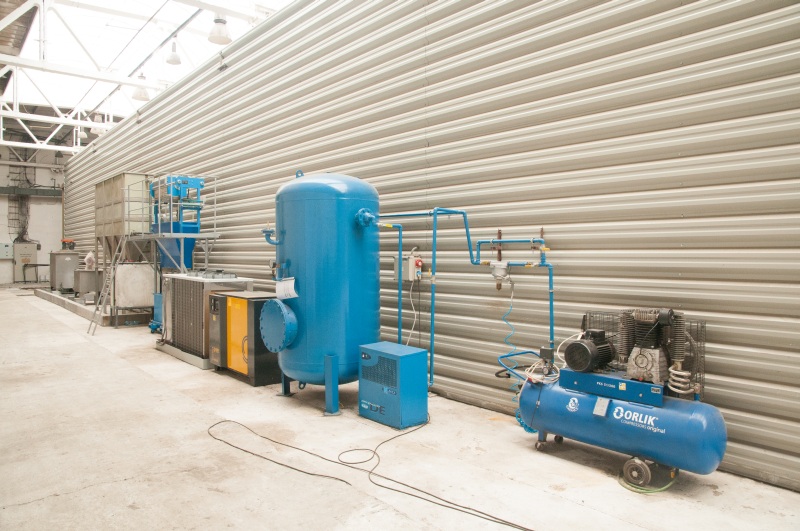
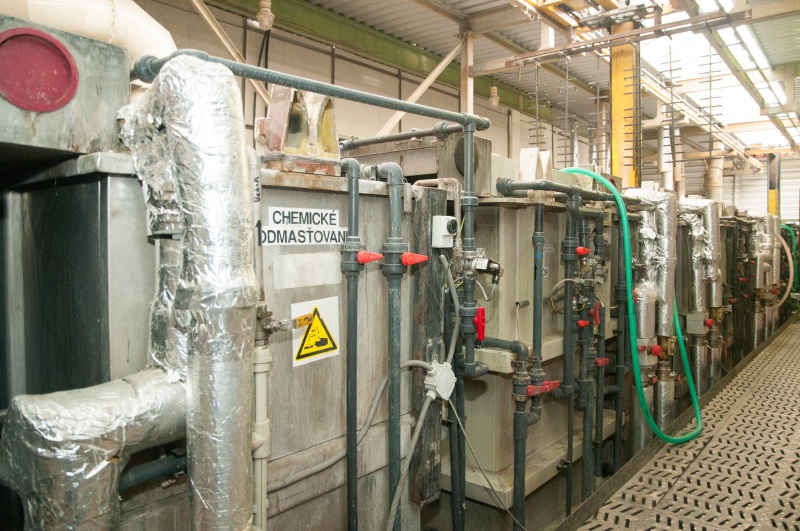
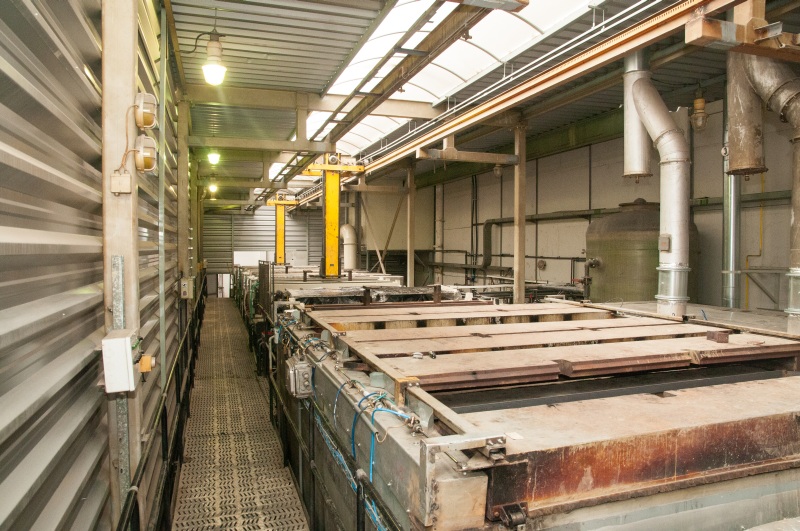
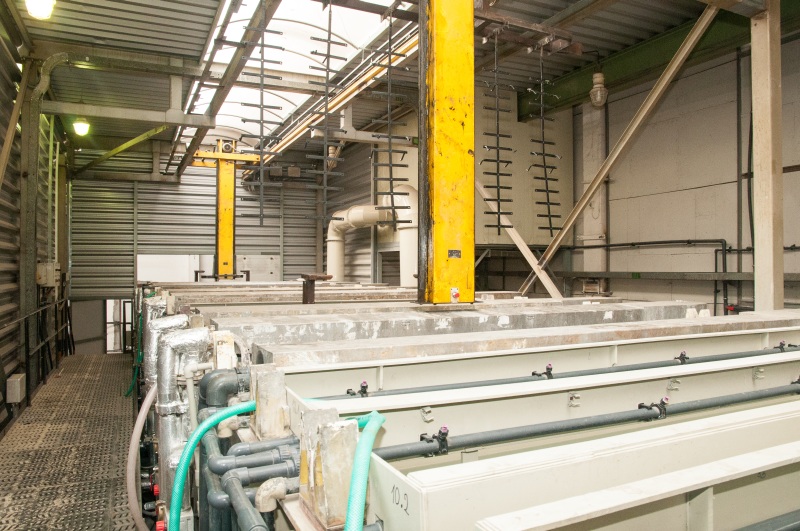
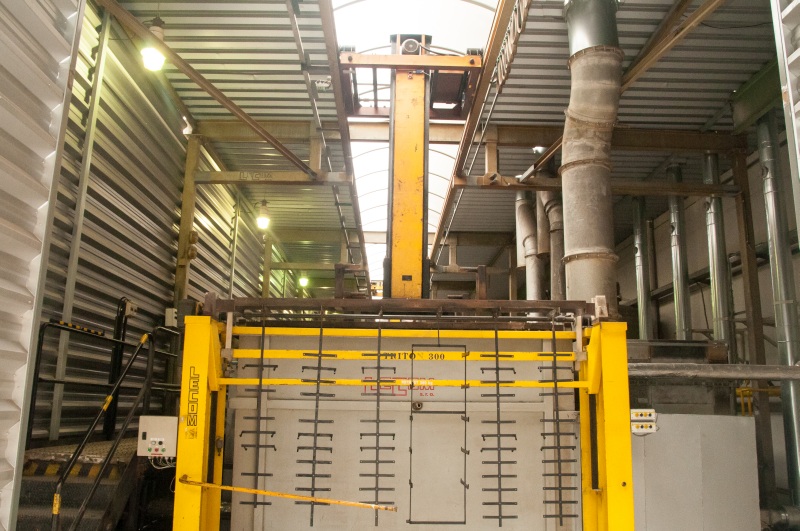
State-of-the-art technology for surface treatment of metal construction products with high corrosion resistance - up to 1000 hours in salt spray.
Contact UsLearn MoreCataphoresis painting is one of two methods of electrophoretic painting. In cataphoresis painting, cationic, water-soluble paints based on epoxies or acrylates with a very low content of organic solvents (around 2%) are used, which contain paint particles in the form of polymer cations.
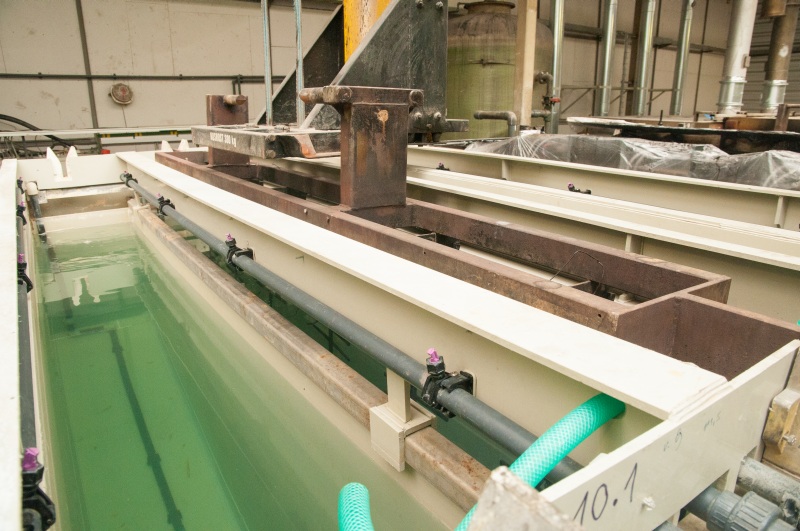
During painting, the product is immersed in a painting tank and connected as a cathode. Applying direct current creates an electric field that causes polycations to move to the cathode. This mechanism creates a coating with a uniform thickness over the entire surface, including hard-to-reach places, edges, or corners.
The thickness of the formed coating depends primarily on the applied voltage and typically ranges from 15 to 30 micrometers. The deposited coating must be baked at temperatures between 155 and 180 °C.
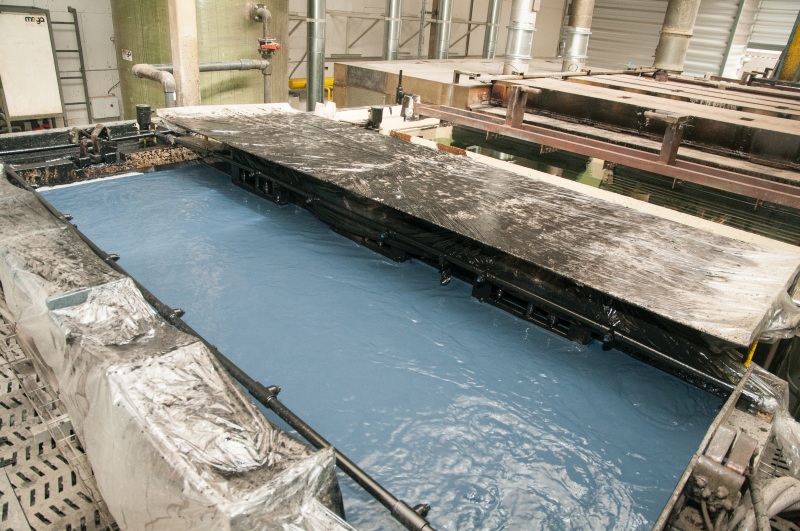
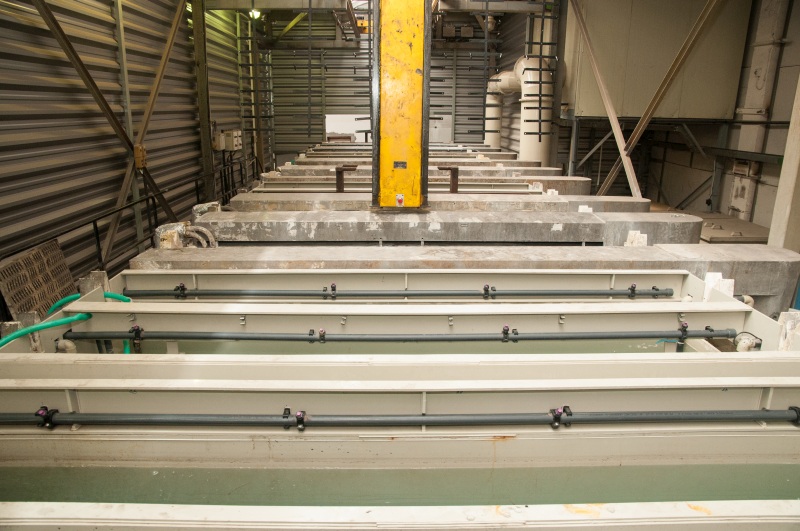
The automotive industry has contributed the most to the development of cataphoresis painting. Today, however, due to the high quality and utility properties of the coating, it is becoming a standard in a variety of other industries:

Minimal burden due to very low solvent content, minimal emissions, and solid waste.
High corrosion resistance of the coating (over 1000 hours in salt spray) at relatively low thickness.
Uniform layer over the entire surface, including hard-to-reach places, edges, corners, and cavities.
Minimal paint losses thanks to a materially closed circuit (virtually 100% paint yield).
Easy automation and process control, low labor intensity, and minimal droplet formation.
No special fire and explosion protection measures are required. Low burden on the working environment.


KTL, s.r.o. was established in 2013 with the aim of creating a modern cataphoresis painting surface treatment facility. We ensure the highest quality of painted parts with high flexibility at favorable pricing conditions.